
A Simple 20-Minute Music Practice Routine for Beginners in Canada
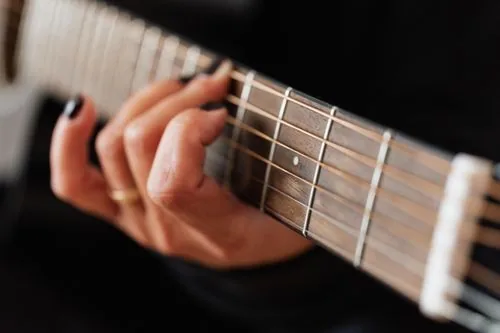
A music practice routine for beginners works best when it has one small goal and a clear finish. When practice feels vague, it is easy to put it off. I suggest choosing one skill and giving it a beginning and an end. This flexible 20-minute plan works for guitar, piano, keyboard or singing; adjust the minutes to suit your energy and instrument. If you are preparing for a graded exam, check the relevant board’s current syllabus and practice guidance.
A focused 20-minute plan
- 2 minutes — get ready. Set up your instrument, choose the passage or exercise from your last lesson, and decide what you want to improve today.
- 4 minutes — warm up gently. Play or sing something simple you already know. Keep the sound comfortable and pay attention to steady timing rather than speed.
- 7 minutes — work on one small challenge. Take a chord change, phrase, rhythm or short section. Slow it down enough to stay relaxed. Repeat a few careful attempts, pausing if you lose track of what you are practicing.
- 5 minutes — put it back into music. Connect the difficult part to the phrase before and after it. Then try the whole short section so the exercise has a musical purpose.
- 2 minutes — make a note. Write down what felt easier and what you want to ask me at the next class. That gives your next practice session a clear starting point.
How to adapt it to your instrument
On guitar, the short challenge might be a chord change or a transition between two lines. At the piano or keyboard, it could be a hand position, a rhythm or a few notes that keep getting missed. For singing, use a comfortable warm-up and focus on one breath, pitch or phrase at a time. I adjust these ideas to the student and the music we are working on.
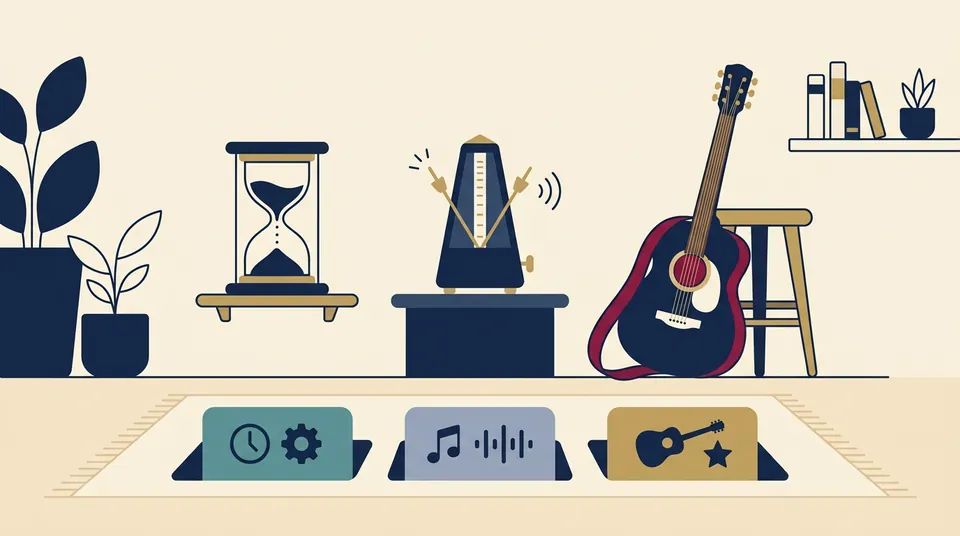
The routine is a guide, not a test. If you only have ten minutes, use two minutes to settle in, six minutes for one clear challenge and two minutes to note what you learned. If you have more time, take a break before repeating the cycle rather than rushing through more material.
What to do when you miss a day
Resume with the next short session; do not try to make up every missed minute at once. If the same passage stays difficult, mark it and bring it to your next lesson. I can listen to what is happening and help you change the approach. A practice note, short audio or video can also help me understand what you worked on between online lessons.
I teach students online across Canada and schedule lessons in their local time. One-to-one classes last 45–60 minutes. Monthly plans are 4 classes for CA$72, 8 for CA$129.60 or 12 for CA$183.60. If you want a practice plan connected to a particular song or instrument, start with a free 15–30-minute intro. You can also read my Gehra Hua guitar lesson for a song-based practice example or my guide to online RCM piano exam preparation.
Questions about daily music practice
Adapting the routine for piano and vocal students
The twenty-minute frame stays the same; the middle block changes. Piano students spend the skill block on one hands-together passage or one scale, not the whole page. Vocal students use it for one phrase at a time — breath first, then the line, then the words. Guitar students keep the block on one chord change or one bar of a riff.
The structure is the teaching; the content is the student's.
Practice log kaise banayein
- Date, minutes, and one line: what improved today?
- One small note for tomorrow's first task, so the next session starts warm.
- Weekly, not daily, review — five minutes on Sunday sets the next week's blocks.
A paper notebook is enough. The log's job is not discipline; it is memory — progress you can see is progress you keep.
When practice goes sideways: three fixes
Every routine breaks sometimes. Missed a week? Restart at half the time — ten minutes, two days — rather than "catching up" with one long session. Bored with the piece? Move the skill block to a new passage while keeping the warm-up identical. Sound not improving? Record Monday and Friday and compare; the ear hears over a gap what it cannot hear in the moment.
Routine ka kaam hai wapas aana, perfect rahna nahi.
A simple weekly template you can copy
- Monday to Friday: 20 minutes — 2 warm-up, 10 skill, 5 music, 3 notes.
- Saturday: longer, gentler — play the week's pieces through once, enjoy them.
- Sunday: rest or pure listening; the log gets five minutes, the instrument none.
Six small sessions and one honest log line a week move a beginner further than any single marathon.
Do beginners need to practice for 20 minutes every day?
No. This is one suggested structure, not a required daily target. Choose a routine you can repeat and talk to your teacher about what fits your age, level and schedule.
Should I practice the whole song every time?
Not necessarily. Spend focused time on one small section, then connect it to the surrounding music so the part does not become isolated.
How can an online music teacher help with practice?
I can listen to your playing, help identify the specific sticking point and agree on a clear next step for the week. That personal feedback is what a recorded tutorial cannot provide.
Exam preparation — four boards, clear scope
I prepare students for Royal Conservatory of Music (RCM) piano exams. I also prepare students for graded music exams from ABRSM, Trinity College London and Rockschool, where the board offers an exam for the student’s instrument and goals.
I am not an RCM-registered teacher. I teach privately from the relevant published syllabus and assessment criteria. The exam board—not me—conducts and marks exams and issues certificates. Students register with the board themselves.
Requirements differ by board, instrument and level. Before choosing an exam, check the current syllabus and discuss which pathway fits the student’s goals.