Frequently Asked Questions
These are the questions students and parents in Canada ask me most often — about ages, class length, time zones, fees, payments, recordings, instruments and exams. Each answer is written to stand on its own, so you do not need to read the whole page to find one. If your question is not here, message me on WhatsApp and I will answer it directly.
Lessons and logistics
What age can children start?
Age 7 and above, and it is the same minimum for every instrument: ukulele, piano and keyboard, guitar, singing, harmonium and Flute/Bansuri all start at 7 and above, and no musical background is needed. Readiness still matters — a child who can sit for a short class and follow one instruction at a time is ready — and the free intro is where we judge that together. Adults can begin at any age. For a student under 18, I contact a parent or guardian before a lesson is booked. No enrolment or class goes ahead until a parent or guardian has confirmed in writing. Written consent is not re-confirmed every month.
How long is a lesson?
One-to-one classes last 45–60 minutes. Group classes last 60–90 minutes, in batches of 5–8 students, with separate children’s and adults’ batches. The free intro is separate and shorter: 15–30 minutes.
What can I choose for a group class?
Group classes cover the instruments I teach, singing and music theory. A group month is a fixed 8 classes for CA$96 per student, usually two classes each week, and each class lasts 60–90 minutes in a batch of 5–8 students. Ask me what is running before you book on the group classes page.
Which platform do lessons run on?
Zoom, Google Meet or WhatsApp Video, in every case. A phone, tablet or laptop is enough, and nothing extra needs installing. Notes, exercises and backing tracks are shared as each lesson needs them.
What time will lessons be?
Yours. We agree a schedule together — 4, 8 or 12 classes a month, scheduled together in your time zone. The slot you agree keeps its local time when daylight saving changes in November or March. I do not promise that every hour is available; if a time does not work, we find another one.
Can lessons be rescheduled?
Yes. For a one-to-one class, message me on WhatsApp or email at least 12 hours before the class and we can reschedule it free. Without that written notice the class counts as taken. Group classes follow a fixed schedule, so a missed group class is not rescheduled individually; I share notes or practice material so you can catch up.
Do I need an instrument to start?
No. A first demo can run on voice alone, and advice on what to buy or rent is part of the free intro, so nothing needs to be bought before we have spoken.
Can I switch instruments later?
Yes. If you are undecided, say so at the intro and we can spend part of it on two instruments. A change later is arranged with me directly, and it is easiest to settle before a monthly plan begins.
Do children and adults learn in the same way?
Not quite. Children usually need shorter, more concrete tasks and often a parent nearby for the first few classes; adults tend to want the reasoning behind a technique and a practice plan that survives a working week. Group batches are separate for children and adults. Compare the kids page with the adults page to see it.
Payment and fees
How much does it cost?
One-to-one monthly plans are 4 classes for CA$72, 8 classes for CA$129.60 (10% off) or 12 classes for CA$183.60 (15% off), and each class lasts 45–60 minutes. Group classes are a fixed 8 classes a month for CA$96 per student, 60–90 minutes a class. All amounts are in Canadian dollars. The 15–30-minute intro is free. The fees page has the full breakdown.
How do I pay from Canada?
Payment is by PayPal, Remitly or Western Union, in Canadian dollars. Fees are paid in advance, and I acknowledge each payment in writing by WhatsApp or email. You do not enter card or bank details on this website.
Are monthly plan fees refundable?
If you withdraw or stop, fees already paid are not refundable, including before the first class of a paid plan. That is subject to the refund I give if I cannot teach and to rights that cannot lawfully be waived. Unused one-to-one classes are not lost immediately: the pause window below still applies. The terms page sets out the full rules.
What happens if I need to pause?
For a one-to-one plan, unused paid classes stay available for two months from the most recent paid one-to-one class you took. If you have never taken a paid one-to-one class, the two months start from the payment date; a free demo is not a paid class. A returning student who buys a new plan and pauses before any class in that new plan discusses the window with me individually, and we confirm the handling in writing. After the applicable period, unused classes lapse.
What if Dr Banerjee cancels a class?
If I cancel a one-to-one or group session, it does not count as delivered and is provided later. The next fee due date is extended until the current plan is completed. If I stop teaching or cannot teach for an extended period, I refund the unused balance in full within 14 working days, with no deduction, for both one-to-one and group plans.
Recordings and privacy
Do you record lessons?
No, I do not record classes. Students may record their own classes for personal practice. A student under 18 needs their parent or guardian’s permission before recording and should tell me before class.
Can a group class be recorded?
Only after all participants, including me, agree. For each participant under 18, the parent or guardian’s permission is also required. Without those permissions, recording is not permitted.
Can I send you a practice clip?
Yes. Students may choose to send their own audio or video practice clips by WhatsApp or email. I receive them for lesson feedback, keep them only as long as needed and then delete them.
What information do you need from us?
For an enquiry and enrolment: a name, contact details, a general location such as a city or time zone, lesson details, and for a student under 18 a parent or guardian’s written consent. A full street address is not required. The privacy policy explains retention and how to make a request.
Do you track visitors to this site?
No. I do not run visitor tracking, advertising or profiling. The site loads its own scripts and media, and YouTube can receive technical information when a thumbnail or player loads, as the privacy policy explains.
Instruments and exams
Which instruments do you teach?
Twelve subjects in two families. Western: guitar, piano and keyboard, ukulele, singing and music theory. Indian: Hindustani vocal, Carnatic vocal, Bollywood singing, harmonium, devotional music, regional songs and Flute/Bansuri. The Western music and Indian music pages list them all.
Do you prepare students for Canadian exams?
For RCM, preparation here is for piano exams. ABRSM, Trinity College London and Rockschool preparation is available where the instrument and grade make it relevant. The boards themselves conduct, mark and certify the exams, and students register with the board directly. The theory and exam preparation page explains the four boards.
Can my child learn Indian music and Western music both?
Yes. Both traditions are taught by the same person, so one monthly plan can hold a guitar class and a Hindustani vocal class without the two pulling in different directions. Tell me both interests at the intro and we will agree how the week divides; the Indian music page covers the second tradition.
Do you teach in languages other than English?
The lesson runs in English, but the songs do not: lyrics are taught in the language they belong to — Hindi, Bengali, Tamil, Gujarati, Sanskrit and others — with roman transliteration available when a student cannot yet read the script. See regional and multilingual songs.
Do you teach in French?
Lessons are taught in English. A French summary of the privacy policy is provided on the privacy policy page, but I do not teach lessons in French.
Before your first video lesson
What do I need ready for the first online lesson?
A device with Zoom, Google Meet or WhatsApp Video, a quiet room, and the instrument if you already have one. For piano or guitar, angle the camera so the keys or both hands are visible; for singing, nothing more than a glass of water is needed. No software beyond Zoom, Google Meet or WhatsApp Video.
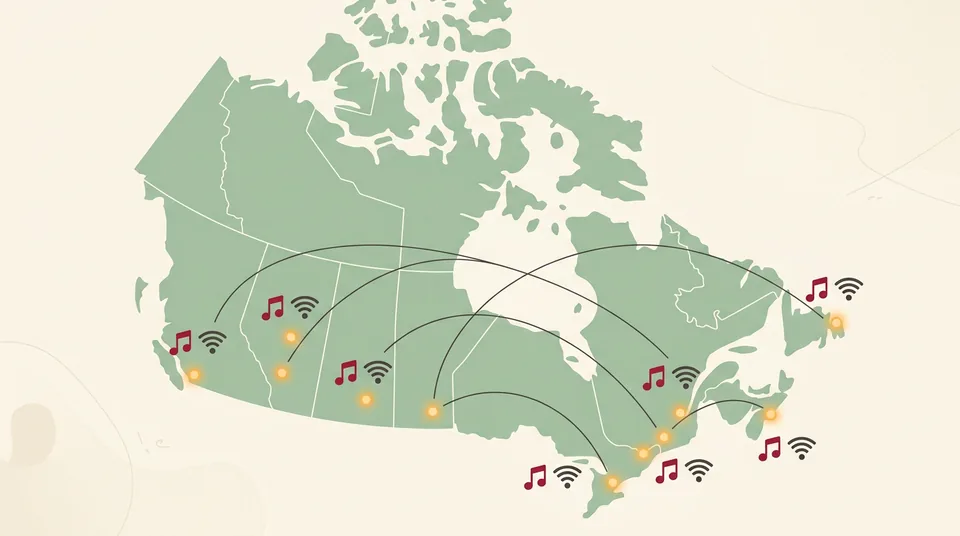
Are lessons only for the six Canadian time zones?
No. Lessons are booked in the student’s own local time wherever they are; Canada’s six zones simply cover most of my students. If you are travelling, or joining from another country, give me your local time and we agree the schedule in it.
The free 15–30-minute intro
Is the free one-to-one intro really free?
It is a real class, not a sales call: 15–30 minutes, one-to-one, on the instrument you are considering, with no card and no obligation to continue. Book it on the demo class page.
What if it isn’t for us?
Then you owe nothing and we part on good terms. The intro exists so a family can judge for itself rather than from a sales page.
Where to look next
- Fees and payment — the full breakdown of one-to-one and group monthly plans
- Group classes — a fixed 8 classes a month for CA$96 per student
- Lessons for adults and lessons for children
- Western music and Indian music — the two families of lessons
- Terms — pause, rescheduling, refund and recording rules
- Book the free 15–30-minute intro
Still have a question?
Ask directly — WhatsApp at +91 62800 75157 or drbnrj@gmail.com. You can also book the free 15–30-minute intro and ask it live; the intro is not one of the paid classes.
Exam preparation — four boards, clear scope
I prepare students for Royal Conservatory of Music (RCM) piano exams. I also prepare students for graded music exams from ABRSM, Trinity College London and Rockschool, where the board offers an exam for the student’s instrument and goals.
I am not an RCM-registered teacher. I teach privately from the relevant published syllabus and assessment criteria. The exam board—not me—conducts and marks exams and issues certificates. Students register with the board themselves.
Requirements differ by board, instrument and level. Before choosing an exam, check the current syllabus and discuss which pathway fits the student’s goals.