Online Piano Lessons in Canada for Beginners: What to Prepare and Expect
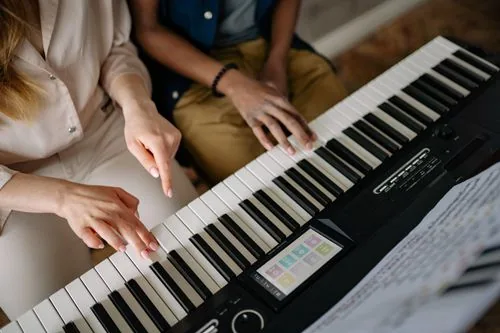
Online piano lessons in Canada for beginners do not require a perfect home studio. A beginner can start with a working piano or keyboard, a phone or computer, and a clear view of the keys. I teach students across Canada; this guide explains how I make early lessons practical.
Use the piano or keyboard you already have
If you have access to a piano or keyboard, begin with that. You do not need to buy a new instrument before talking through your goals. If you are still choosing one, I can discuss what you want to learn and what will fit your space during my free intro. To practice between lessons, you will need regular access to an instrument.
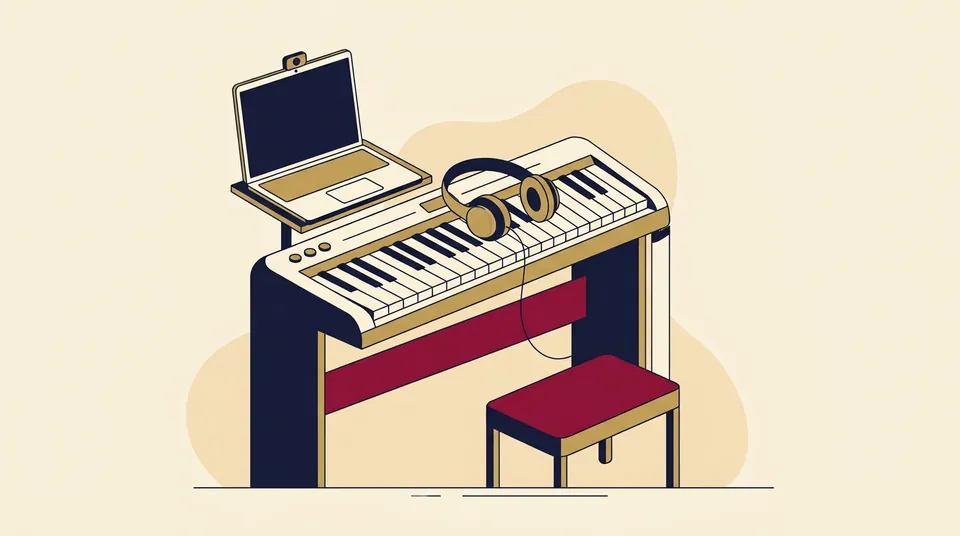
For a live online piano lesson, place your device so I can see your hands and enough of the keyboard to follow what you are playing. A stable stand, a quiet corner and light that reaches the keys are more useful than an elaborate setup. If you use headphones, make sure the instrument can still be heard clearly through the call.
What to have ready for the first class
- Your piano or keyboard and a comfortable seat at the right height for you.
- A phone, tablet or computer placed securely where the camera can show your hands and keys.
- A quiet space for the lesson, with notifications muted if possible.
- A notebook or a notes app for the small practice goal we choose together.
You do not need to read music before you begin. Tell me what kind of music you enjoy and what you hope to play. I can then choose a starting point that suits your current level.
What happens in my beginner piano lessons
I start by listening and watching, not by testing you. I want to know how comfortable you feel at the keyboard, what you can already do and what you would like to learn. From there, I work on a small number of basics—such as finding notes, keeping a steady pulse, coordinating both hands or reading a short phrase—at a pace you can repeat at home.
Each lesson should leave you with one clear next step. That might be a short melody, a chord pattern, a rhythm or a few bars of a song you like. Taught personally by Dr Banerjee, so you can continue from one week to the next without being matched with a different tutor.
Keep practice short enough to repeat
After a lesson, try a short, focused practice block on several days of the week rather than saving everything for one long session. Start with the part that needs attention, slow it down, then put it back into the whole phrase. If something feels confusing, make a note and bring it to the next lesson instead of repeating it without a plan.
I schedule live online lessons around your local time, whether you are in Toronto, Ottawa, Calgary, Vancouver or another Canadian community. One-to-one classes last 45–60 minutes. Monthly plans are 4 classes for CA$72, 8 for CA$129.60 or 12 for CA$183.60. You can read the details on my fees page or see the piano and keyboard lesson page.
Common questions about online piano lessons
Five first-month milestones for online piano
By the end of month one a beginner can usually: sit with a steady posture, play five notes each hand without looking down every beat, play one short melody hands together, count a simple 4/4 line aloud, and record one take without the camera wobbling. None of these needs talent; all five need the routine.
Milestones haaf ka nagma nahi — sirf is baat ka proof hain ki hafta bhar ka kaam sahi disha mein gaya.
Keyboard vs piano for online lessons
A keyboard with 61 or more touch-sensitive keys carries a beginner for years; 88 weighted keys matter later for advanced repertoire. For online classes the microphone matters as much as the instrument: a phone or laptop mic near the keyboard gives the teacher tone, not just notes.
Buying advice is free at the intro — ask before you buy, not after.
Can I start if I have never played before?
Yes. I teach beginners and start with the basics that fit your goal and instrument. You do not need previous lessons or music-reading experience.
Does an online teacher need to see the keyboard?
Yes, a camera angle that shows your hands and keys makes it easier for me to give useful feedback. I can help you find a workable position at the start.
What if I am still deciding what instrument to buy?
You can tell me what you hope to learn during the free intro before buying. To practice between lessons, you will need access to a piano or keyboard.
If you are ready to begin, tell me your experience and the music you enjoy in a free 15–30-minute online intro. I will suggest a practical first step.
Exam preparation — four boards, clear scope
I prepare students for Royal Conservatory of Music (RCM) piano exams. I also prepare students for graded music exams from ABRSM, Trinity College London and Rockschool, where the board offers an exam for the student’s instrument and goals.
I am not an RCM-registered teacher. I teach privately from the relevant published syllabus and assessment criteria. The exam board—not me—conducts and marks exams and issues certificates. Students register with the board themselves.
Requirements differ by board, instrument and level. Before choosing an exam, check the current syllabus and discuss which pathway fits the student’s goals.