
Carnatic Online Lessons for Indian Families in Surrey, Brampton and Toronto
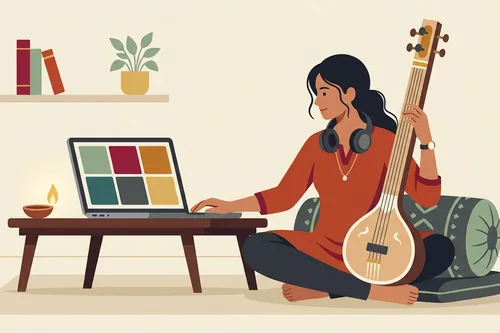
For many Indian families in Surrey, Brampton and Toronto, the question is not whether the children will learn music — it is how to keep the tradition alive this far from home. Carnatic online lessons make that possible: one-to-one classes over video, a teacher who knows the repertoire, and a schedule that fits Canadian school and work timetables. This guide explains how Carnatic music classes online actually work, what a beginner learns first, and how families in Canadian cities typically arrange them.
What Carnatic music teaches first
Carnatic music — the classical system of South India — is built on disciplined foundations. A beginner normally starts with the shruti (the tonic drone, from a tanpura or an electronic shruti box), then sarali varisai: graded note sequences that train pitch accuracy, breath control and the hand-swing of tala. From there come janti varisai, alankarams, geetams and eventually varnams and kritis — the composed heart of the tradition. Vocal learners and instrumental learners follow the same ladder; lessons here are one-to-one, so the pace follows the student.
How online Carnatic classes work
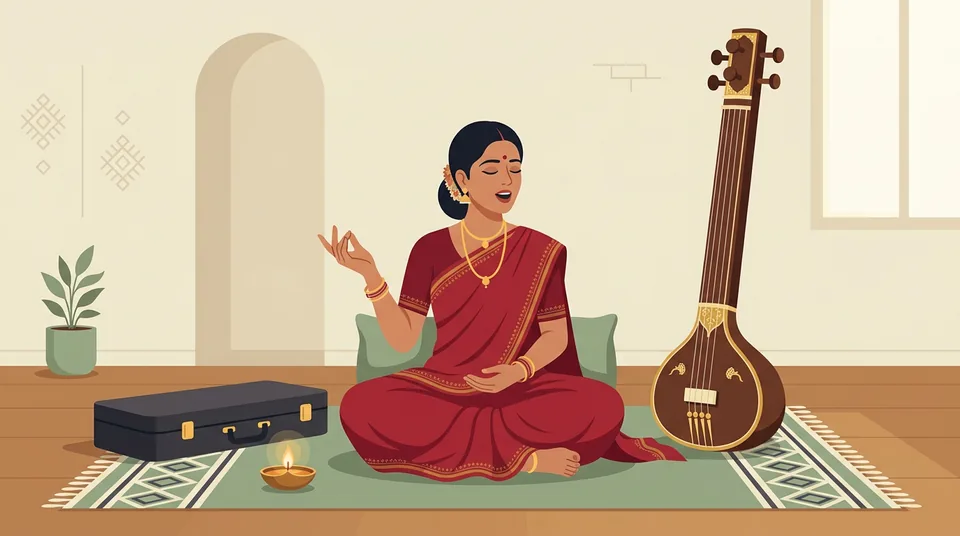
Classes run one-to-one over video: the teacher demonstrates a phrase, the student repeats it, and corrections happen in the moment — much like sitting in the same room. A few practical points Canadian families care about:
- Times are agreed in your local time zone. Evening and weekend slots work around school in Surrey or work in Toronto; the weekly schedule is agreed together, not imposed.
- Home setup is simple. A phone or laptop, headphones, and a shruti box or tanpura app are enough to begin. Vocalists can start with nothing but their voice.
- Children and adults learn separately. One-to-one classes suit any age; group batches, where preferred, run as separate children's and adults' groups.
- Both traditions are welcome here. I teach Carnatic and Hindustani traditions — many families eventually ask about the difference; the related guide on learning Hindustani music online covers the North Indian side.
For families in Surrey, Brampton and Toronto
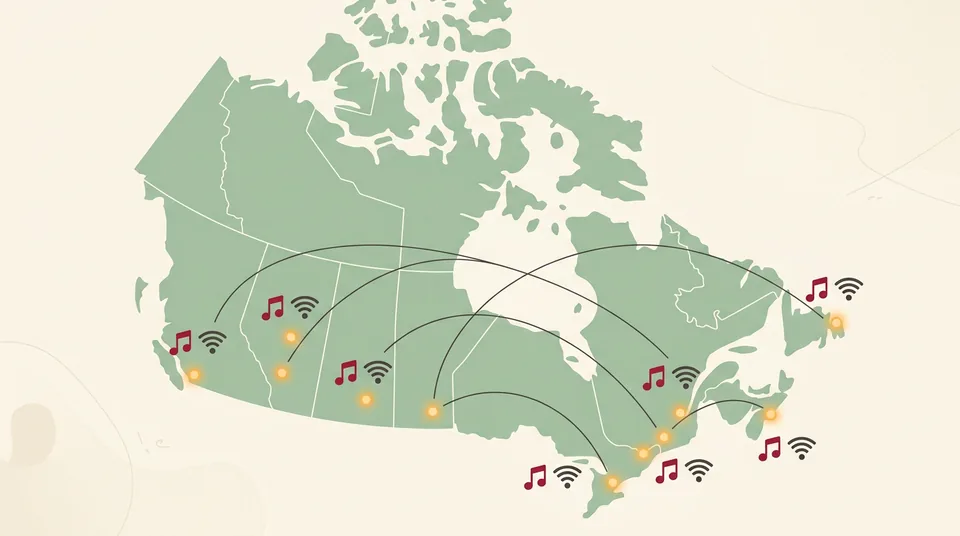
These cities have large and growing Indian communities, and demand for structured Indian-music teaching outstrips the local teacher supply. Online one-to-one classes close that gap — and they fit mixed families too: one child on Carnatic vocal, another on piano, parents joining from the same living room. City pages gather the local details: Surrey, Brampton and Toronto — all classes are live online, taught personally by Dr Banerjee.
Wondering about the broader system — Hindustani, Carnatic and Western — and how online lessons carry them? The guide to Indian music lessons summarises the options, and Hindustani vocal has its own page.
Try a free one-to-one intro first
Before any enrolment or payment, book one free 15–30-minute one-to-one intro — an introduction with me, not one of the paid classes. After the intro, one-to-one monthly plans are 4 classes for CA$72, 8 classes for CA$129.60 (10% off) or 12 classes for CA$183.60 (15% off), each class 45–60 minutes; a group month is a fixed 8 classes for CA$96 per student. Full details are on the fees page; book the free intro on WhatsApp at +91 62800 75157 or by email at drbnrj@gmail.com.
Practice routine ghar par: 20 minutes ka plan
Carnatic practice rewards short daily singing over long weekend sessions. A simple 20-minute shape works for most beginners: two minutes of shruti settling and breathing, six minutes of sarali varisai and janti varisai, five minutes of the current lesson piece line by line, and the last few minutes singing it through with the tanpura drone on.
Bachon ke liye the same plan works with shorter blocks: even ten steady minutes on school nights keeps the voice and the tala alive until the next class.
Shruti, tala aur tech: setup basics
Three things make an online Carnatic lesson feel almost in-person. First, the shruti: an electronic shruti box or tanpura app on a phone speaker is fine to start. Second, the tala: a small lap beat with the hand keeps geography of the beat even before a full tala system is taught. Third, the tech: the laptop camera at seated eye level, headphones with a microphone for clear feedback, and a quiet corner where the drone can hum without echo.
Setup ek baar dhang se kijiye — har class smooth chalti hai, aur practice recordings sunne mein bhi aasani hoti hai.
Geetams to varnams: the first two years
The path after sarali varisai is well marked. Geetams — short songs by Purandara Dasa — arrive within the first months and give children their first complete performances. Swarajatis stretch the phrases; then the first varnam teaches the architecture of raga in miniature. Two years in, a diligent student carries a small repertoire and steady tala.
Har level ka apna rishta hai — naya material purane DNAs par khada hota hai, isliye foundations ka jaldi nahi lena chahiye.
Involving parents in the online class
- Sit in for the first three classes to learn the class language (sa, ri, tala counts).
- Keep practice to the same time daily; children argue with clocks, not parents.
- Appreciate the singing, not the child — "that phrase was steady" beats "you're a star".
Online classes make the home the classroom; a parent who knows the routine becomes the ally, not the supervisor.
Frequently asked questions
Can children learn Carnatic music online from Canada?
Yes. One-to-one online classes follow the same graded path taught in India — shruti, sarali varisai, geetams and onward — with times agreed in the family's local time zone.
Do we need a tanpura to start online lessons?
No. A phone or laptop with headphones is enough to begin; the drone can come from an electronic shruti box or a tanpura app. Instrumental students add their instrument as they go.
Are the classes suitable for adults who learnt as children in India?
Yes. Returning learners are common — lessons pick up from where you left off, rebuilding varnams and kritis at your pace rather than a batch's pace.
How are class times arranged for families in Surrey, Brampton or Toronto?
Classes are scheduled together for 4, 8 or 12 classes a month in your local time, including evening and weekend options agreed in advance.